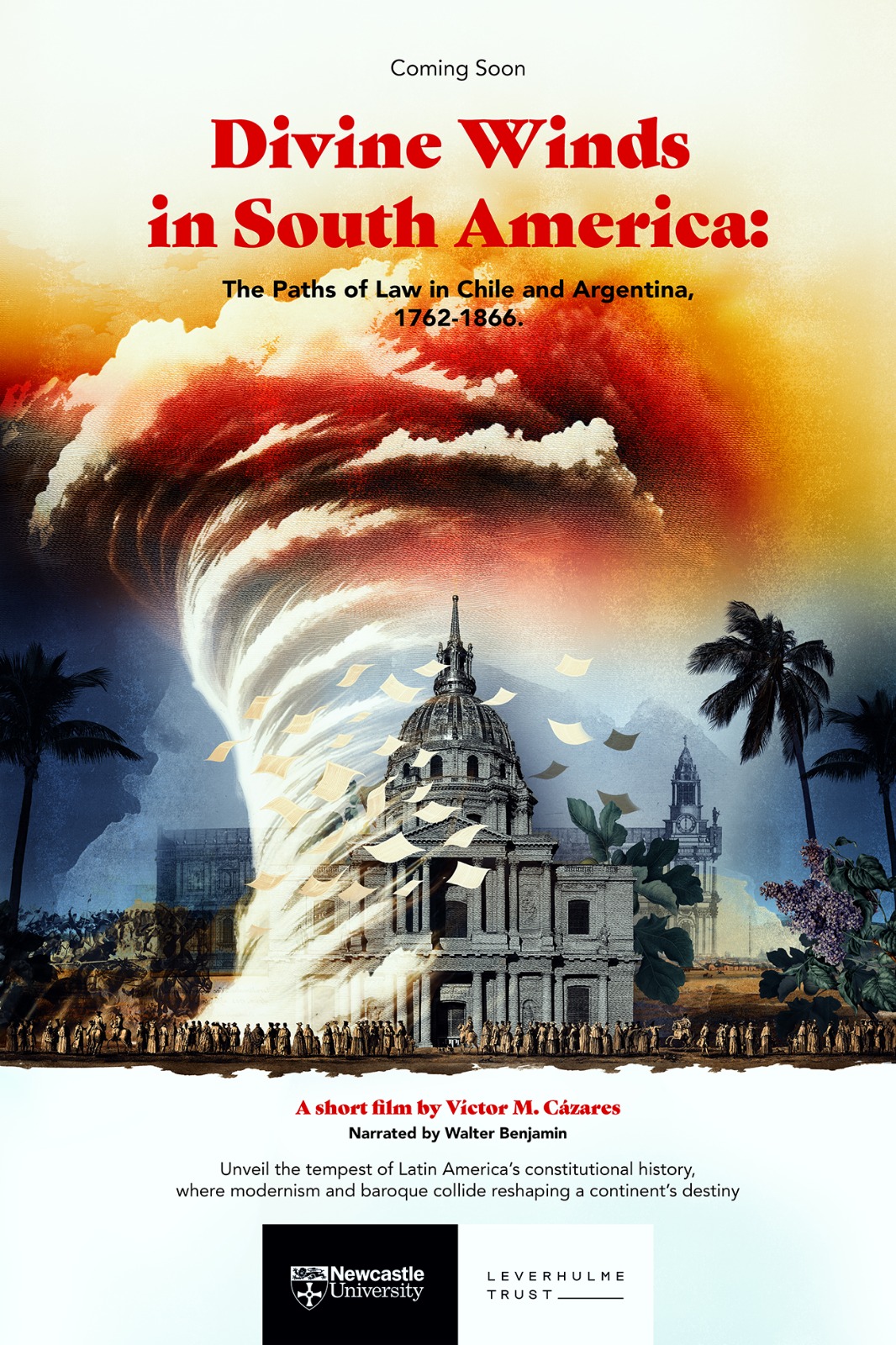
Divine Winds in South America — still from animated short film

new worknuevo trabajo

Divine Winds in South America

The Paths of Law in Chile and Argentina, 1762–1866

An animated short film exploring the relationship between law, violence, and constitutional change in Chile and Argentina — from the late colonial period through the nineteenth century — situated within a continental framework that includes the United States and Haiti. A synthesis of Baroque and Modernist aesthetics renders constitutional history in visual form.Un cortometraje animado que explora la relación entre ley, violencia y cambio constitucional en Chile y Argentina — desde el período colonial tardío hasta el siglo XIX — situado dentro de un marco continental que incluye a Estados Unidos y Haití. Una síntesis de estéticas barrocas y modernistas que traduce la historia constitucional en forma visual.

fieldcampo

Iberian Atlantic history, legal culture, visual media.Historia atlántica ibérica, cultura jurídica y medios visuales.

based inradicado en

Mexico CityCiudad de México

current worktrabajo actual

Book manuscript, film research, public-facing history.Manuscrito de libro, investigación fílmica e historia pública.

A historian working across constitutions, empire, visual culture, and the political life of the Americas.Un historiador que trabaja entre constituciones, imperio, cultura visual y vida política de las Américas.

selected publicationspublicaciones seleccionadas

A visible sample of published work, with direct access to the full publications page.Una muestra visible del trabajo publicado, con acceso directo a la página completa de publicaciones.

"Worlds Unwound, Worlds Rewoven: Latin America's Journey from Imperial Domains to Republican Experiments, and Shifting Legal Orders."

Latin American Research Review, 2025, 1–15.

doi.org/10.1017/lar.2024.69

"Building Order in the Age of Revolutions. A Transnational History of Constitutional Making: 1787–1867."

In Peace, Discontent and Constitutional Law, ed. Martin Belov. New York: Routledge, 2021.

doi.org/10.4324/9781003083894-10

"Charles A. Beard's Vision of Government: Rethinking American Democracy in the Machine Age."

The Journal of the Gilded Age and Progressive Era 19, no. 1 (Jan. 2020), 122–149.

doi.org/10.1017/S1537781419000410

view complete publication list →ver lista completa de publicaciones →

researchinvestigación

The site foregrounds a single major project, then situates it within a broader scholarly practice spanning constitutional history, comparative Atlantic studies, and visual narration.El sitio pone al frente un proyecto mayor y luego lo sitúa dentro de una práctica académica más amplia que cruza historia constitucional, estudios atlánticos comparados y narración visual.

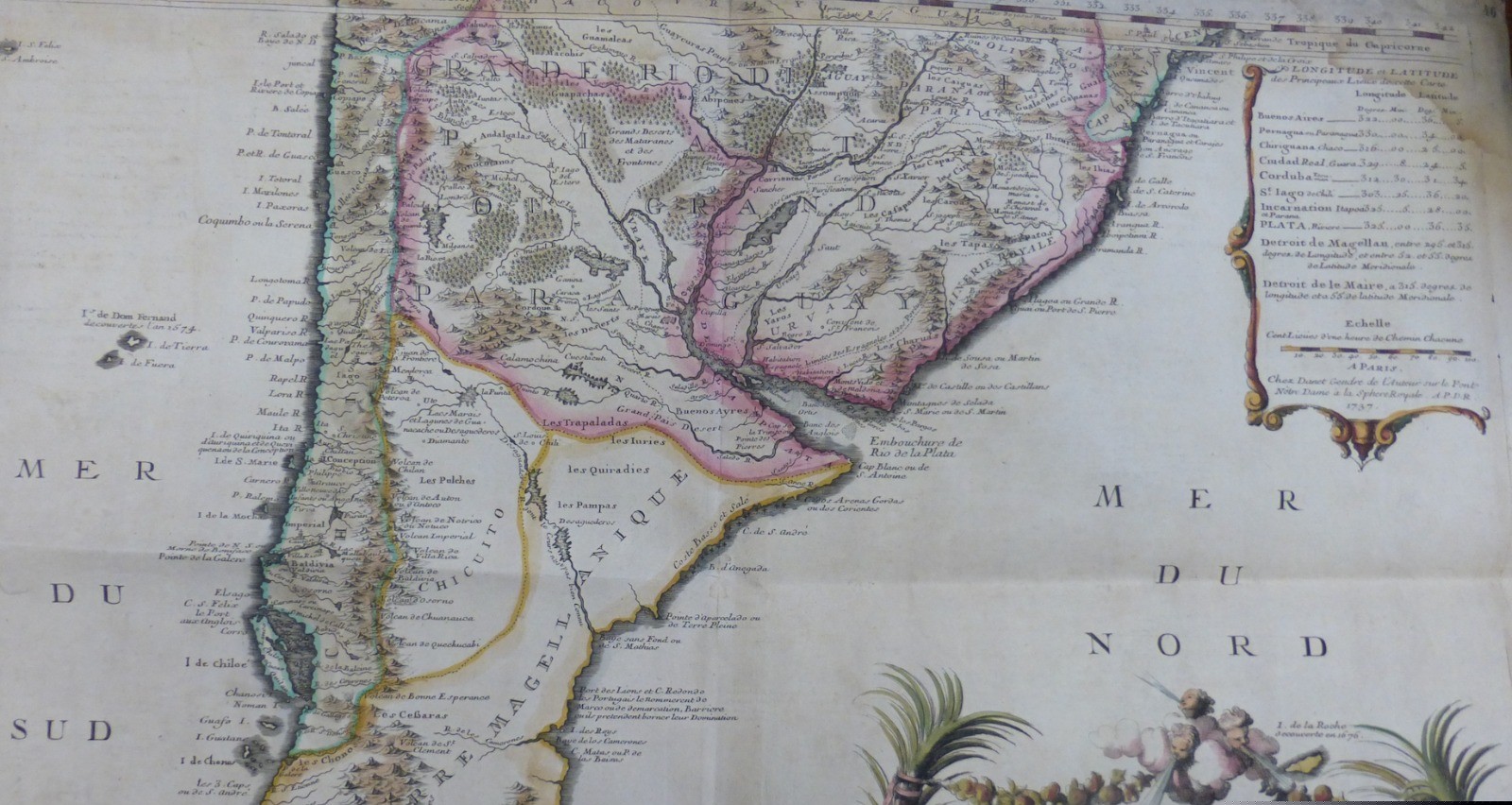
South America — research context

Film & Public EngagementCine y divulgación

Divine Winds in South America: The Paths of Law in Chile and Argentina, 1762–1866
Animated short film (20 minutes), Newcastle University, 2024.Cortometraje animado (20 minutos), Newcastle University, 2024.

A visual essay exploring the relationship between law, violence, and constitutional change in Chile and Argentina from the late colonial period through the nineteenth century, situated within a continental framework that includes the United States and Haiti.Un ensayo visual que explora la relación entre ley, violencia y cambio constitucional en Chile y Argentina desde el período colonial tardío hasta el siglo XIX, situado dentro de un marco continental que incluye a Estados Unidos y Haití.

Book ManuscriptManuscrito de libro en preparación

Tempest-Tossed: Charles A. Beard and the Rise of American Civilization

Teaching InterestsIntereses docentes

The Iberian Atlantic World from Conquest to Independence · Colonial Latin America: Law, Culture, and Society · Comparative Constitutional History of the Americas · Atlantic World History · Visual and Material Cultures of Empire · Postcolonial Histories of Chile, Argentina, and the United States · Conceptual Histories of Empire, Race, Democracy, and Constitution.El mundo atlántico ibérico de la conquista a la independencia · América Latina colonial: derecho, cultura y sociedad · Historia constitucional comparada de las Américas · Historia del mundo atlántico · Culturas visuales y materiales del imperio · Historias poscoloniales de Chile, Argentina y Estados Unidos · Historias conceptuales de imperio, raza, democracia y constitución.

awards & grantspremios y becas

  • Leverhulme Early Career Fellowship, Newcastle University, 2021–2024
  • British Academy Postdoctoral Fellowship, UCL, 2021–2024 (declined)British Academy Postdoctoral Fellowship, UCL, 2021–2024 (declinada)
  • Edinburgh Santander Research Scholarship, 2011–2014
  • CONACYT Doctoral Scholarship, 2011–2016Beca doctoral CONACYT, 2011–2016
  • FUNED Scholarship for Master's Studies, 2007Beca FUNED para estudios de maestría, 2007
  • Fellow of the Higher Education Academy (FHEA), UK, 2025

blog

Short essays, reflections, and future notes on law, history, images, and the Atlantic world.Ensayos breves, reflexiones y notas futuras sobre derecho, historia, imágenes y el mundo atlántico.

Thinking Hemispherically

There is a mental habit we inherited from the nineteenth century and have not yet learned to abandon: the habit of reading the Americas as two parallel stories, one in the north and one in the south, glancing at each other but never quite touching. The North, in this telling, invented modern democracy in 1776. The South imitated it, belatedly and badly, from 1810 onward, producing caudillos where it should have produced presidents. That dividing line is one of the most persistent fictions of Atlantic historiography, and one of the least examined. To think hemispherically is something else. It refuses the arithmetic of originals and copies. It treats 1776, 1810, 1812, and 1824 as moments of a single process: the unraveling of the European empires that had claimed the hemisphere for three centuries, a shared wager on republican government, and a common set of problems — how to raise armies, fix borders, hold territory, invent a people — that no one on either side of the equator knew how to solve in advance.

contactcontacto

for inquiriespara consultas

Academic collaboration, lectures, workshops, and public history projects.Colaboración académica, conferencias, talleres y proyectos de historia pública.

I welcome inquiries about collaboration, speaking engagements, and academic exchange.Agradezco consultas sobre colaboración, conferencias e intercambio académico.